Mindfulness in the midst of a PhD and a global pandemic - By Brinna Barlow
Mindfulness is the practice of intentionally and acutely experiencing the present without judgment.
Kindness towards oneself is important at all times in life, but especially when undertaking challenging and demanding work, such as a PhD. The desire to be in the future, where I have the data, have the knowledge and have the skills can sometimes consume my time and prevent me taking the steps I need to take in the present to achieve those future states. This effect is exacerbated by being surrounded almost exclusively by academics. Whether in the office or at a bar I am in the company of intelligent, skilled and often more advanced members of the university. This is of course mostly a blessing, but it can be a curse on those days where the evening comes around and I am disappointed that I have not achieved the goals that I set myself in the morning.
My frustrations peaked this summer as Hong Kong experienced it’s third wave of COVID-19 and the university implemented working from home to increase the safety of offices and labs for those people who really did need to come in for experimental reasons. I was not one of those people; my focus was solely on finishing a document to complete my confirmation of candidature. So, being a responsible sort of person, I stayed out of the office, every day, for seven weeks. I worked from home, I worked at friends’ houses, I worked from cafes and restaurants and bars. I rotated my workspaces and stretched and worked-out and ate well and drank a lot of water and did everything I could to keep myself motivated and of sound mind. Out of those 49 or so days I think I completed my daily goals on just one or two occasions.
Near the start of these seven weeks, when I was already feeling defeated, I began to practice mindfulness. This is not a new concept to me; I have dabbled in the past. But I earnestly taught myself different practices, different focusses and I began to train every day. Mindfulness did not make me more productive, but it allowed me to accept my failings without judgement, during a period that I think the global community can all agree has been… less than optimal. Third wave has now broken (well done Hong Kong) and I am back in the office in my focus-space and sat on my very supportive desk chair, but I continue to practice mindfulness daily. Taking the time to sit in the present moment and patiently steering myself back to the present moment when my mind inevitably wanders elsewhere, is (among other things) teaching me to be a better academic.
Although I do still procrastinate about which task to do first, I find myself better able to stay on-task once I have started. I am also becoming much more adept at drawing my attention back to the paper I am reading when my eyes start to glaze over and I begin to think about lunch, or dogs or really big trees. Mindfulness is not a silver bullet, but I have found that regular practice is helping me in all the ways described above. So, if you’re feeling limited by circumstance or by yourself and you’re expending energy in frustration, might I suggest trying mindfulness to move towards acceptance and maybe you’ll find yourself benefiting in other ways to boot.
If the practice of mindfulness interests you, check out this Wiki-how to help you get started on your own mindfulness journey.
https://www.wikihow.com/Do-Mindful-Meditation

La biodiversité de La Réunion
We are back in Reunion for another month of field work. We will be collecting insects and collaborating with local scientists to investigate biodiversity and biogeography on this oceanic island.
Here some pics and videos from our last trip:




Panther chameleon
Tropical storm Fakir
Waterfall at Cascade du Chien
New Paper Alert! Ants dominate waste management in tropical rainforests
The Termite Ant Research Team has a new paper out in The Journal of Animal Ecology:
Ants are the major agents of nutrient redistribution from tropical rainforests.

Here is the press release (from The University of Liverpool):
"A study by the University of Liverpool, in collaboration with the Natural History Museum, has found that ants are responsible for moving more than half of food resources from the rainforest floor, playing a key role in maintaining a healthy ecosystem.
A large scale study of the rainforests of Malaysian Borneo by Liverpool researchers found that ants alone were responsible for removing more than half of food resources from the rainforest floor.
The rest of the waste was removed by all other animals combined, including mammals, birds and other vertebrates and invertebrates. Resources and waste which ants remove include dead animal bodies, seeds and fruits.
Liverpool ecologist, Dr Kate Parr, said: “The movement, consumption and recycling of dead organic material in ecosystems is important because it facilitates nutrient redistribution and decomposition. Because ants collect waste products and take them to their nests, they create hotspots of nutrients where plants and microbes thrive; this maintains a diverse and healthy soil.
The study showed that in the absence of ants no other animals can compensate for this role. Therefore, if ants weren’t carrying out waste removal, dead organic material would build up and decompose more slowly in situ creating a more homogenous, less diverse soil environment.
Lead author of the study, Dr Hannah Griffiths, also with the University’s School of Environmental Sciences added: “This work is important because tropical rainforests are some of the most threatened ecosystems on the planet, losing species at an alarming rate.
“Understanding exactly what role different animals play in ecosystems is akin to putting in place pieces of an incredibly complex puzzle. The more pieces we have in place, the better we see the full picture and understand how the system functions. This in turn allows us to predict the consequences of species losses and create measures to mitigate the negative consequences of human impacts on ecosystems.”
The paper `Ants are the major agents of resource removal from tropical rainforests’ is published in the Journal of Animal Ecology (doi: 10.1111/1365-2656.12728)."
This paper has been covered by the Daily Mail, Phys.org, The Daily Ant and Nature.
September 2016
Here is a long overdue photo blog update from our last TART field trip!
We started our field trip with a visit to the new research facility at Imbak Canyon. This was a fun side trip to see the facility and a different part of Sabah. Imbak is very beautiful and the new facility is massive, perhaps a good place to do research in the future.


Back to Maliau, we set up multiple expeirments on our termite and ant suppresson plots.


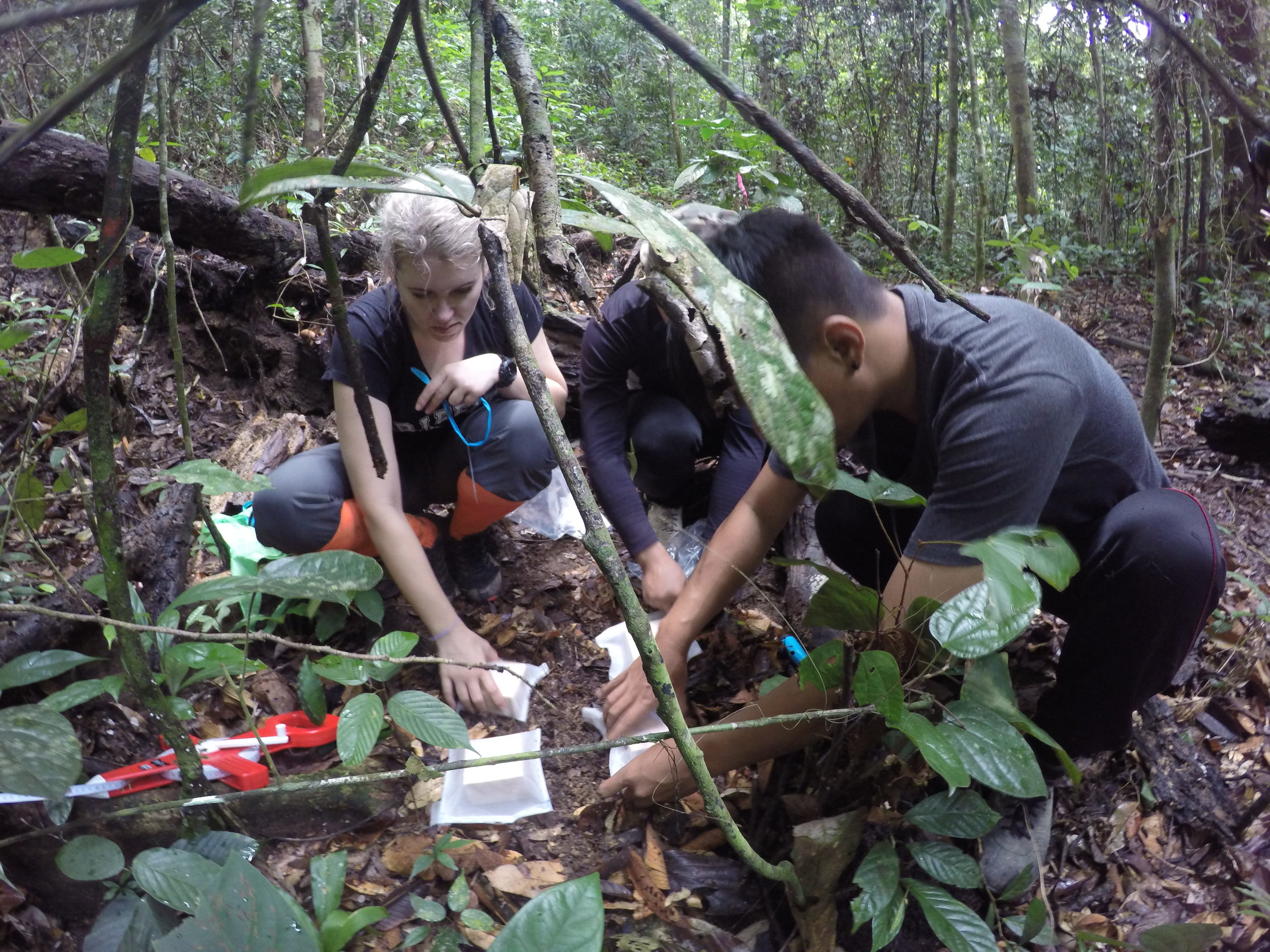


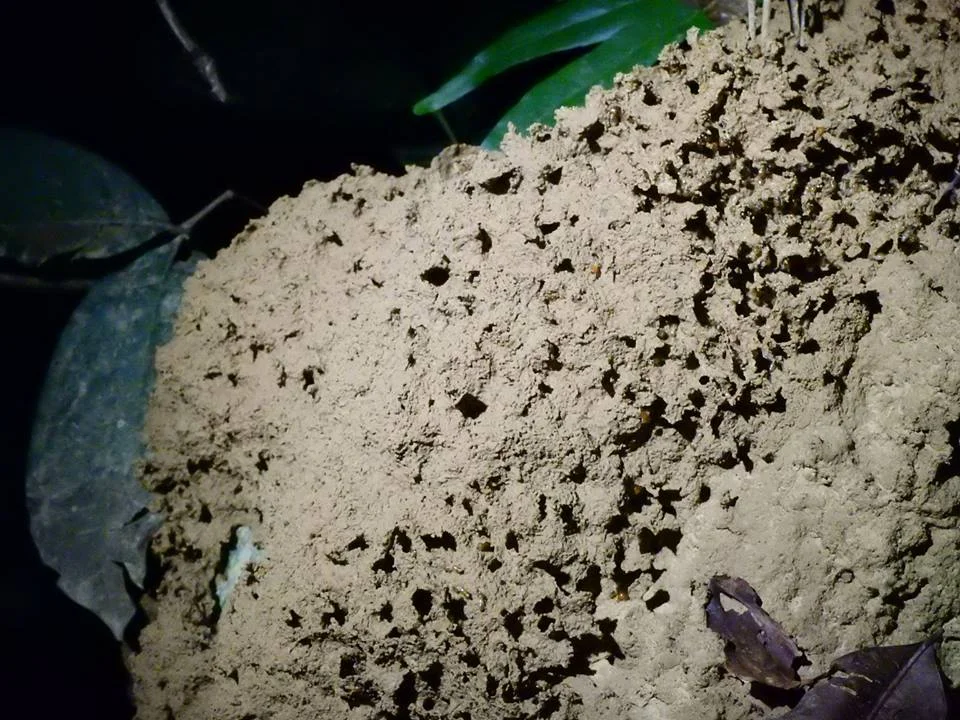


We came across some amazing wildlife while working in the forest and went on some night walks to look for nocturanal wild life.